Deformational Plagiocephaly
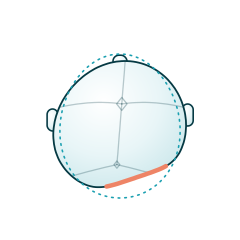
If your baby's head looks like a parallelogram when viewed from above, or one ear has shifted forward, it may be deformational plagiocephaly. With early intervention, the shape can be corrected with a cranial orthosis (helmet).
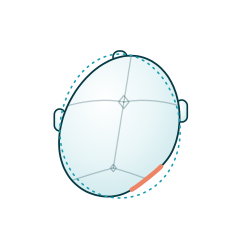
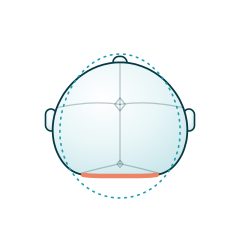
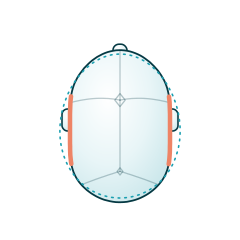
- Normal head contour
- Flattened area
On this page
Have you noticed these?
Signs
If you notice any of these signs, consult a specialist.
- One-sided flattening at the back of the head
- One ear sitting further forward than the other
- Asymmetry of the forehead or cheeks
- Parallelogram shape when viewed from above
- Always turning the head to the same side when lying down (often with torticollis)
What Is Deformational Plagiocephaly?
Deformational plagiocephaly is the most common head shape disorder in newborn babies. It is popularly known as "flat head syndrome", "lopsided head" or simply "flat head". The condition is characterized by a baby's head taking on a shape that differs from normal after birth. It usually becomes noticeable right after birth or during the baby's first few months. Its main causes include babies lying in the same position for long periods and the pressure the head may be exposed to during delivery. Premature babies in particular are at higher risk of deformational plagiocephaly, because their skulls are still soft and easily moulded. The condition can affect physical appearance and may also cause some problems in a baby's development. Plagiocephaly shows itself as asymmetry in the shape of the head. Flattening at the back or side of the head can affect the position of the ears and the forehead. When looking at the baby's face, the eyes and cheeks may also commonly appear asymmetrical. To learn more about deformational plagiocephaly and to assess its severity, it is recommended to consult a specialist pediatrician. The condition is treatable and, if it does not improve on its own over time, it can usually be managed with supportive treatment methods. Below you will find information on the main features and severity of deformational plagiocephaly: This information covers the basics of deformational plagiocephaly and helps parents better understand the condition.
Types of Deformational Plagiocephaly
Deformational plagiocephaly refers to an asymmetrical shape deformity of a baby's head and can be divided into several types. These types differ in their causes, the areas they affect and their clinical findings. The main types of deformational plagiocephaly and their characteristics are listed below: Each of these types can have different consequences for the baby, and treatment approaches may also vary. Early diagnosis is very important for successful treatment, so parents are advised to pay attention to their baby's head shape and to consult a specialist doctor if they notice anything unusual. Understanding the types of deformational plagiocephaly helps in recognizing risk factors and developing the necessary preventive strategies.
Symptoms and Diagnosis of Deformational Plagiocephaly
Deformational plagiocephaly is an asymmetrical shape deformity of a baby's skull, and it presents with certain signs and findings. The first signs can be observed within a few months after birth. The most common signs parents should watch for are: • Flattening on One Side of the Head: The most obvious sign is one side of the baby's head being flatter than the other. This shows up as a larger flat area at the back of the head or on one side. • Facial Asymmetry: The baby's cheeks, eyes or one side of the forehead may sit noticeably further forward or back than on the other side. • Changes in Ear Position: The asymmetrical shape of the head can also change where the ears sit. One ear may appear to have shifted forward compared with the other. • Sleeping Positions: A baby who always sleeps with the head turned to the same side, or who stays in one position for long periods, is also among the signs of plagiocephaly. Diagnosis is usually based on an examination by the pediatrician. The doctor will carefully observe the baby's head shape and may assess it in more detail using the following methods: • Physical Examination: The baby is examined in various positions and the shape of the head is evaluated. • 3D Head Measurement Systems: The shape of the skull can be analyzed in detail with 3D scanning systems such as the STARscanner. This method helps to determine the extent and severity of the deformity objectively. • Radiological Imaging (If Needed): In rare cases, a CT scan of the head or other imaging methods may be used to detect structural problems in the skull. Early diagnosis and intervention are critical in the treatment of deformational plagiocephaly. That is why it is important for parents to watch for these signs and to consult healthcare professionals when needed.
Treatment Options for Deformational Plagiocephaly
Treatment of deformational plagiocephaly varies depending on the severity of the condition and the baby's age. In general, the treatment options can be listed as follows: The treatment process is usually associated with helmet use. The shape of the baby's head should be checked regularly. Below are some points to keep in mind: • Follow-Up Visits: Regular check-ups with the doctor are an important part of helmet therapy. These visits should confirm that the helmet is being worn correctly and track whether the head shape is improving. • Timing and Duration: Treatment usually lasts between 3 and 6 months. Throughout this period, the improvement in head shape should be monitored continuously. • At-Home Measures: During treatment, parents should change their baby's position so that the baby does not stay in the same position unless necessary. Remember that starting treatment early offers a greater chance of success. Because every child is different, it is also important to always consult a healthcare professional to determine the most suitable treatment.
Deformational Plagiocephaly and Preventive Strategies
Deformational plagiocephaly is a condition that causes asymmetrical shape deformities of a baby's skull. There are several strategies you can use to help prevent it. Here are some effective preventive methods: Applying the strategies above can help reduce the development of deformational plagiocephaly and may also support your baby's motor development. Remember that every baby is different, so if you have any concerns, be sure to consult a healthcare professional. Plagiocephaly is a condition characterized by one side of a baby's skull being flatter than the other. It usually results from the baby lying in a particular position for a long time. This asymmetry leads to flattening of the baby's head and the formation of a flat area on one side. In some cases it can affect overall motor skills, but in most cases it is a treatable problem. One of the main factors causing plagiocephaly is the baby always sleeping in the same position. This is something to watch for especially in newborns. In addition, babies with torticollis, a neck muscle problem, may be unable to turn their head to one side. Premature birth can also increase the risk of a head deformity, and trauma during delivery can also cause plagiocephaly. Treatment of plagiocephaly depends on how severe the condition is. Mild cases can be treated with repositioning and physical therapy. For more severe cases, cranial helmet therapy may be used. The helmet is specially designed to correct the shape of the baby's skull. Treatment usually lasts 3–6 months, and regular follow-up with check-ups at set intervals is recommended. Plagiocephaly shows itself as noticeable flattening on one side of the baby's head and the resulting asymmetrical appearance. Asymmetry in the alignment of the ears and distortion of the forehead or cheeks may also be observed. If the baby's head does not look even when viewed from above and certain movements are restricted, plagiocephaly may be suspected.