Scaphocephaly (Sagittal Suture Synostosis)
Scaphocephaly is the premature closure of the sagittal suture, which makes the head long from front to back and narrow. Surgery is usually required, followed by reshaping with a cranial orthosis.
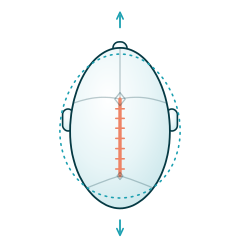
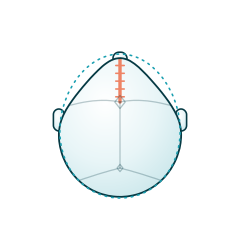
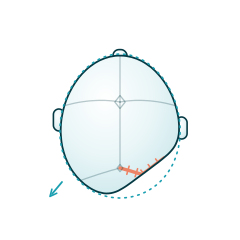
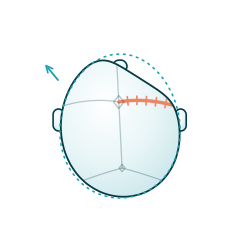
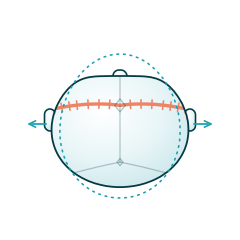
- Normal head contour
- Prematurely fused suture
- Compensatory growth
On this page
Have you noticed these?
Signs
If you notice any of these signs, consult a specialist.
- Markedly long and narrow head
- Prominent forehead bossing
- Pointed or prominent back of the head
- Palpable ridge along the sagittal suture
- Normal head circumference but abnormal head shape
- Need for reshaping with an orthosis after surgery
What Is Scaphocephaly?
Scaphocephaly is one of the congenital head shape disorders and represents one of the most common types of craniosynostosis. It is characterized by abnormal elongation of the head caused by premature closure of the sagittal suture. The sagittal suture is a seam running along the top of the skull that joins the two halves of the skull. The hallmark sign of scaphocephaly is a long, narrow head shape. Over time, this change in the baby's head shape can produce hollows that become more noticeable at the back of the head and a forward bulge of the forehead. Scaphocephaly is more common in baby boys and is usually noticed at birth. Early diagnosis is vital to the success of treatment. If the condition is neglected, it can have a negative effect on brain development: the brain, which should otherwise grow at a normal pace, becomes constrained within a narrow skull, which can lead to a range of developmental problems. Surgery is generally the preferred treatment for this condition. The treatment plan varies according to the severity of the condition and the baby's age. Because scaphocephaly can cause long-term neurological problems if not treated in time, the baby's skull should be monitored continuously and a specialist doctor should be consulted when necessary. In this way, both healthy physical and psychological development can be supported.
Symptoms of Scaphocephaly
Scaphocephaly refers to a condition in babies characterized by abnormal lengthening and narrowing of the skull. It is usually noticed within a few months of birth and may present with the following signs: • Abnormal Head Shape: The baby's head may be longer and narrower than normal. The front and back of the head are usually prominent. • Loss of Symmetry: Babies may show a loss of head symmetry, with a noticeable side-to-side asymmetry. Differences in the distance between the eyes may also be observed. • Forward-Protruding Forehead: Noticeable bossing of the forehead is common in babies with scaphocephaly. This is a result of the abnormalities affecting the skull. • Changes in Eye Position: The eyes may appear deeper-set or higher than normal as a result of the changes in the baby's skull structure. • Developmental Delays: This abnormal shaping of the skull can negatively affect brain development, which may lead to delays in physical and cognitive development. • Pain or Discomfort: Sometimes babies with scaphocephaly may experience headaches or a sense of discomfort. Although these symptoms are usually more pronounced in adults, they can also be seen in babies. Below is a detailed summary of these symptoms: If you notice these signs in a baby, it is very important to consult a healthcare professional without delay. With early diagnosis and appropriate treatment, the negative effects of conditions such as scaphocephaly can be minimized, helping the baby develop healthily.
Scaphocephaly Treatment Options
Scaphocephaly generally presents as an abnormal change in the shape of a baby's skull. Treatment options vary depending on the severity of the condition and the baby's age. Here we look at the most common methods used to treat scaphocephaly. • Surgical Intervention: If the scaphocephaly is advanced, surgery is necessary. The operation is performed as a cranial vault remodeling procedure, in which the skull bones are released and reshaped so that the skull can take on a proper shape. This type of surgery is generally recommended for babies aged 3–12 months. • Helmet Therapy: Specially designed helmets are used to correct the shape of the baby's skull. This method is generally suitable for babies aged 3 to 18 months; the helmet applies gentle pressure to the baby's head to help it achieve a normal shape. Helmet therapy generally takes place between 3 and 18 months of age. • Regular Follow-Up: Regular follow-up throughout treatment is important for assessing the baby's condition. It plays a critical role both in checking how well the treatment is working and in minimizing possible side effects. It is vital for parents to see a specialist doctor as soon as they notice signs of scaphocephaly so that treatment can begin early. When signs of scaphocephaly are observed, a prompt diagnosis and treatment process will have a positive effect on the baby's development.
Causes of Scaphocephaly
Scaphocephaly, a notable condition that begins with the question "what is scaphocephaly?", arises from a variety of causes that affect brain development and skull shape. It occurs as a result of abnormalities in the development of the skull bones, particularly during infancy. The main factors that cause scaphocephaly are as follows: The conditions that lead to scaphocephaly usually arise from an interaction between hereditary and environmental factors. For example, taking these causes into account during scaphocephaly treatment can make the treatment plan more effective. Early diagnosis and treatment are very important for babies' healthy development. That is why it is important for parents to have their babies' head shape checked regularly and to seek help from specialists if they have any concerns. Scaphocephaly is a head shape disorder caused by premature closure of the sagittal suture. It gives the skull a long, narrow shape and is more common in baby boys. Because of the early closure, brain development may be adversely affected. In addition to its effect on appearance, this abnormality can increase pressure on the brain and lead to problems with cognitive development. Signs of scaphocephaly include an abnormal head shape, loss of head symmetry and a noticeable bulge of the forehead. The skull may be longer and narrower than normal. The condition can also cause uneven eye positioning, headaches and developmental delays. If such signs are observed, it is important to see a healthcare professional without delay. Scaphocephaly is usually treated with surgery. In cases diagnosed early, endoscopic surgery can be performed to open the sagittal suture and allow the skull to regain its normal shape. In addition, specially designed Cranioplus orthotic helmets can be used after treatment to correct the head shape. The course of treatment may vary according to the child's health. If scaphocephaly is not treated, a range of risks may arise, including permanent head shape deformity, serious problems with brain development, and social and psychological difficulties. As well as preventing the skull from growing normally, it has negative effects on cognitive and physical development. For this reason, early diagnosis and treatment are extremely important.