Baby Head Shapes: What Is Normal and What Is Not?
Why do baby head shapes vary? What flat spots, uneven, triangular or long heads may mean, what CI and CVAI are, and how to position your baby.
Mild head shape differences caused by birth are common in newborns and most improve on their own in the first weeks. However, clear flattening at the back or side of the head, an uneven head, a triangular forehead or a very long, narrow head may need specialist assessment. Positional (deformational) head shape differences are not the same as craniosynostosis, the early fusion of skull sutures, and only a doctor can make that diagnosis.
Why can a baby's head shape vary?
A baby's skull is made of several bony plates separated by flexible sutures and soft spots. This lets the head mould during birth and the brain grow quickly in the early years, but it also means the skull can be shaped by external pressure. Common influences include:
- Temporary moulding during birth
- A cramped position in the womb or twin pregnancy
- Premature birth and long periods in one position in intensive care
- Always lying on the same side, or neck tightness (torticollis)
- Less commonly, early fusion of one or more sutures (craniosynostosis)
What does a normal baby head shape look like?
There is no single "ideal" shape; heads vary with family and ethnic background. Seen from above, the head is usually a gentle oval, both sides are close to symmetrical, the ears are level and the forehead is balanced. The elongated look some babies have after a vaginal birth usually settles within days to a few weeks.
What are the main head shape conditions?
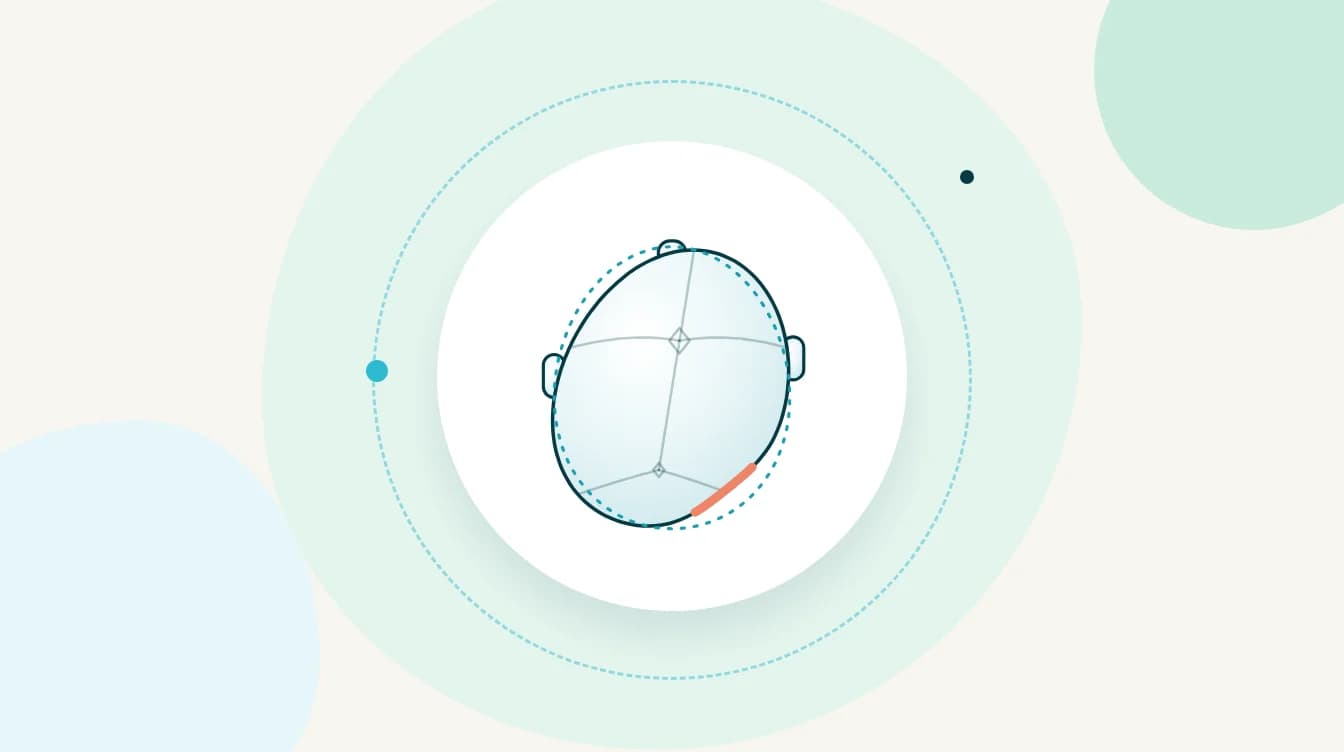
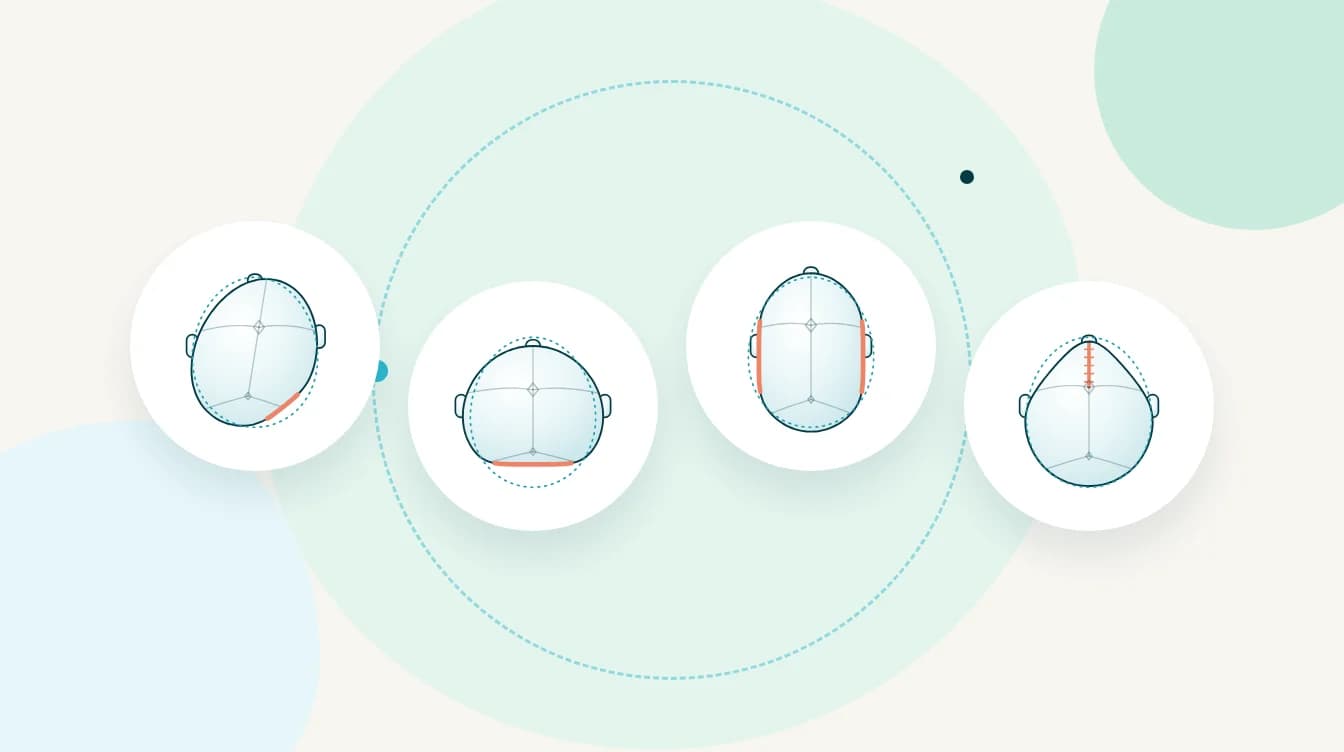
- Plagiocephaly: flattening on one side at the back; from above the head may look like a parallelogram and the ear on that side may shift forward.
- Brachycephaly: central flattening at the back, making the head short and wide.
- Dolichocephaly: a long, narrow head flattened at the sides, often seen in premature babies nursed on their side.
- Scaphocephaly: a long, narrow, boat-shaped head caused by early fusion of the sagittal suture.
- Trigonocephaly: a pointed, triangular forehead caused by early fusion of the metopic suture.
You can read more about each of these on our treatments page.
Positional flattening or craniosynostosis: what is the difference?
In positional flattening the sutures are open and the shape change comes from external pressure; it is usually managed with repositioning, tummy time and, when needed, a cranial orthosis. In craniosynostosis one or more sutures have fused early, limiting growth in that direction, and surgical assessment is usually required. Because they can sometimes look similar, a specialist must make the distinction.
Is a triangular forehead always serious?
A mild ridge in the middle of the forehead is seen in some babies and does not always mean the suture has fused. A clearly pointed forehead, a triangular head from above and closely set eyes should be assessed by a neurosurgeon or relevant specialist, through examination and imaging if needed.
What are CI and CVAI?
Measurements help assess head shape objectively, usually with callipers or a radiation-free 3D optical scan:
- CI (Cephalic Index): head width divided by length, times 100. Higher values suggest a short, wide head (brachycephaly); lower values a long, narrow one (dolichocephaly or scaphocephaly).
- CVAI (Cranial Vault Asymmetry Index): the difference between the two diagonal measurements of the head, expressed as a percentage. The higher the value, the more marked the left-right asymmetry (plagiocephaly).
These numbers do not make a diagnosis on their own; a specialist interprets them with age, examination and change over time. Thresholds differ between classification systems.
How should I position my baby for a good head shape?
- Always put your baby to sleep on the back, on a firm flat mattress, with no pillows or positioners.
- Alternate the direction your baby's head faces in the cot.
- Change the cot's orientation so interesting things are on the less-preferred side.
- Offer plenty of supervised tummy time while awake.
- Carry your baby upright and limit time in car seats, bouncers and swings.
- Alternate sides when feeding, and have a persistent head-turn preference checked.
Does a flat head correct itself?
Many mild positional cases improve when spotted early and repositioning is used, especially once babies gain head control and start sitting. Moderate to severe flattening does not always respond enough. The first months, when the skull grows fastest, are when cranial orthosis is generally considered more effective, so early assessment is better than waiting.
When should you see a specialist?
- Flattening that does not improve or gets worse over several weeks
- Uneven ears or forehead when viewed from above
- A clearly pointed or triangular forehead
- A noticeably long and narrow head, especially from birth
- A soft spot that seems closed very early or slow head growth
- Your baby always turning the head to one side
Start with your pediatrician; suspected craniosynostosis needs neurosurgical assessment. To have your baby's head shape measured, you can book an appointment.
Frequently asked questions
Is a cone-shaped newborn head normal?
Yes, it is common after vaginal birth and usually settles within days to a few weeks. If it does not, speak to your doctor.
Does head shape affect brain development?
Positional flattening is generally considered a shape difference rather than a brain development problem. Craniosynostosis can restrict skull growth and needs medical follow-up.
Should I use a pillow to shape my baby's head?
No. Safe sleep guidance advises against pillows, head-shaping pillows or positioners in the cot.
What CVAI value needs a helmet?
The decision is never based on a single number; measurements, age, response to earlier measures and examination are considered together by the specialist and the family.
Memet Ateş
Prosthetist–Orthotist