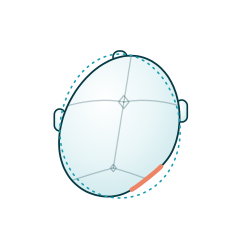
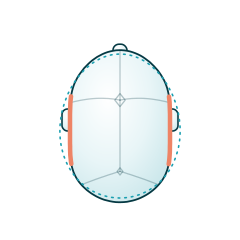
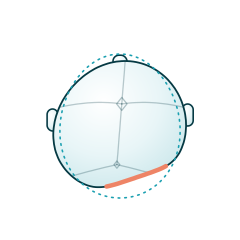
Deformational Brachycephaly
If the back of your baby's head looks flat and wide, it may be brachycephaly. Lying on the back, prematurity and torticollis are the most common causes. It can be reshaped with a cranial orthosis between 3 and 18 months of age.
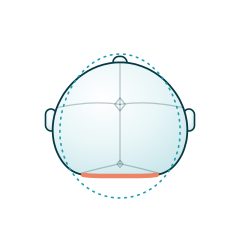
- Normal head contour
- Flattened area
On this page
Have you noticed these?
Signs
If you notice any of these signs, consult a specialist.
- Flat and wide back of the head
- Short front-to-back length with a wide side-to-side width
- Prominent forehead bossing
- Ears pushed forward
- Habitually lying on the back
- Tightness in the neck muscles (torticollis)
- Delayed motor development
What Is Brachycephaly?
Brachycephaly is a condition characterized by a marked shortening of the typical shape of the skull. The term comes from Ancient Greek and combines "brachys", meaning "short", and "kephale", meaning "head". Brachycephaly is a cephalic disorder seen in babies and, in some cases, adults, and it usually starts to become noticeable from birth. Brachycephaly is defined by flattening at the back of the skull and widening at the sides. It can occur when a baby's skull is shaped unevenly by external pressures early in development. During infancy in particular, the skull is still very soft and flexible, so it is easily affected by external forces. A baby frequently lying in the same position at an early age plays a major role in the development of brachycephaly. Signs of brachycephaly include physical features such as flattening of the back of the head, a head that looks wider and shorter when viewed from above, and ears that are slightly shifted forward. Sometimes developmental delays or cognitive problems may also be observed alongside the condition. Brachycephaly is also associated with certain genetic syndromes. For example, brachycephaly is frequently seen in conditions such as Down syndrome. For this reason, it is important that babies diagnosed with brachycephaly are evaluated in more detail. If left untreated, brachycephaly can lead to a permanent head shape deformity. However, with early diagnosis and appropriate treatment, the condition can be brought under control. Treatment options for brachycephaly include orthotic treatment and repositioning. Special helmets or orthoses are used to help the baby's head develop more symmetrically. Finally, brachycephaly-related conditions should be taken into account for a baby's healthy development, and it is recommended to see a specialist if possible signs are observed.
What Are the Symptoms of Brachycephaly?
Brachycephaly is a condition that results in a markedly short skull. It can present with many different signs. Symptoms of brachycephaly are usually observed in infancy and are among the important signs to watch for during a baby's care. The signs and findings of brachycephaly are described in detail below: • Flattening at the Back of the Head: In babies with brachycephaly, the back of the head is usually flattened. This can make the sides of the baby's head look fuller than normal. • Wide, Short Head Shape: Brachycephaly makes the head wider and shorter than average proportions. As a result, the head may look broader when viewed from above. • Change in Ear Position: Sometimes babies with brachycephaly show a change in ear position. The ears may sit further forward on the sides of the head than normal. • Forehead Bossing: In brachycephaly, a noticeable bulge may be seen in the forehead area. This reflects a disruption of the skull's normal form. • Asymmetrical Facial Appearance: In some cases of brachycephaly, there may be asymmetry in the facial structure, with one side of the face looking more prominent or different from the other. • Distinctive Head Shape: When viewed from above, the baby's head may look round or blunt. This is particularly noticeable in infancy. • Discomfort and Fussiness: Babies with brachycephaly may sometimes feel unsettled because of the shape of their head. This may be because they cannot stay comfortably for long in positions that support the head. Because symptoms can vary from one child to another, it is extremely important to be attentive about brachycephaly and to seek professional care when necessary. When parents notice these signs, they should consult a specialist to learn about treatment options. Remember that brachycephaly treatment can be more effective when the condition is diagnosed early, so watching for these signs matters.
Brachycephaly Treatment Options
Treatment options for brachycephaly vary depending on the severity of the head shape disorder and the child's age. Options differ according to whether the problem is mild or advanced. Here are the most effective treatment methods: • Positional Therapy: Positional therapy, the most common first-line approach, involves changing the baby's lying positions. Its aim is to keep any part of the head from staying under constant pressure by having the baby sleep turned to different sides. During this process, placing the baby at different angles and changing sides frequently is encouraged. • Cranial Helmet Therapy: Another method preferred in severe cases of brachycephaly is cranial helmet therapy. This special orthotic device helps the baby's head take on the correct shape. It usually gives the best results in babies aged 4–6 months. The helmet balances the external pressure while allowing growth in the restricted areas. Treatment usually lasts between 3 and 6 months. • Physiotherapy: Physiotherapy, used to reduce additional muscle tension in babies, is particularly helpful in conditions with adverse effects such as torticollis. This treatment aims to strengthen the neck and shoulder muscles so that the baby has better head control. • Use of Pillows: Special pillows designed to help correct head shape, particularly during sleep, may be used. These pillows apply less pressure to certain areas, helping the head regain its natural shape. • Surgical Intervention: In very rare and severe cases of brachycephaly, surgery may be necessary. Because surgery is performed to correct the symmetry of the skull, it is usually carried out when the baby is older than 1 year. The choice of treatment should be adapted to each child's individual situation. A specialist should always be consulted for a definitive diagnosis and an appropriate treatment plan. Starting treatment early is one of the most important steps in managing the signs of brachycephaly and supporting the child's healthy development.
Causes and Risk Factors of Brachycephaly
When looking for an answer to the question "what is brachycephaly?", it is important to also consider the causes and risk factors behind this head shape disorder. Brachycephaly usually arises from various external influences on the baby's head shape and from genetic predispositions. Here are the main causes and risk factors: • Positional Factors: A baby's head staying in a particular position for a long time can lead to brachycephaly. Lying on the back in particular can cause flattening at the back of the skull. This has become more common because of the back-sleeping habits encouraged by the Back to Sleep campaign. • Congenital Problems: Some babies may be born with a brachycephalic head shape because of compression or irregular positioning in the womb before birth. This is seen more often in multiple pregnancies (twins or triplets). • Premature Birth: Babies born early have softer skulls that are more sensitive to external pressure. For this reason, premature babies are at higher risk of brachycephaly. • Weight and Size: The loads on the mother's body during pregnancy can directly affect the baby's head shape. The heads of larger, heavier babies are exposed to more pressure during delivery, which may increase the risk of brachycephaly. • Maternal Health: The mother's health during pregnancy, particularly the presence of problems such as diabetes or hypertension, can affect the development of the baby's head shape. Poor nutrition or low amniotic fluid may also play a role in the development of brachycephaly. • Genetic Predisposition: Babies with a family history of brachycephaly are more likely to develop the condition. Genetic factors can govern the complex process that influences the development of skull shape. These causes and risk factors are elements that can contribute to the development of brachycephaly. With early diagnosis and treatment, the complications of this condition can be minimized. It is important for parents to monitor their child's head shape regularly and to get timely help by reporting any changes to specialists.
Frequently Asked Questions About Brachycephaly
Concerns about brachycephaly in babies are among the topics parents discuss most often. In this section, we answer the most frequently asked questions about brachycephaly: To learn more about your baby's head shape deformity or brachycephaly and to evaluate treatment options, it is important to consult a specialist. Brachycephaly refers to a skull that is shorter than typical. It is usually characterized by flattening at the back of the baby's head. In babies, brachycephaly can arise from causes such as lying in a confined position or pressure before birth. Brachycephaly is generally harmless, but in certain cases it may require treatment. It usually results from the baby's head remaining constantly in a certain position during or after birth. In addition, psychological factors and genetic influences may also increase the risk of brachycephaly. Brachycephaly can easily be diagnosed through a physical examination. Specialists assess the shape of the baby's head and check for asymmetry or flattening. Imaging methods may also be used when necessary to monitor skull development. Parents' observations also play an important role in diagnosis. Untreated brachycephaly can, in some cases, lead to chronic head shape deformities and cosmetic concerns. In rare cases, problems affecting brain development may also arise. Early intervention makes it possible to prevent such complications. Brachycephaly is usually treated with repositioning and special helmets. Repositioning focuses on changing the baby's sleeping positions so that the same areas of the head are not under constant pressure. Helmet therapy uses orthotic devices designed to guide the skull into the correct shape. The length of treatment depends on the severity of the condition.