How Long Does a Baby Wear a Cranial Helmet? Daily Hours and Duration
How many hours a day and for how many months is a cranial helmet worn? When treatment usually starts, follow-up visits and how the end is decided.
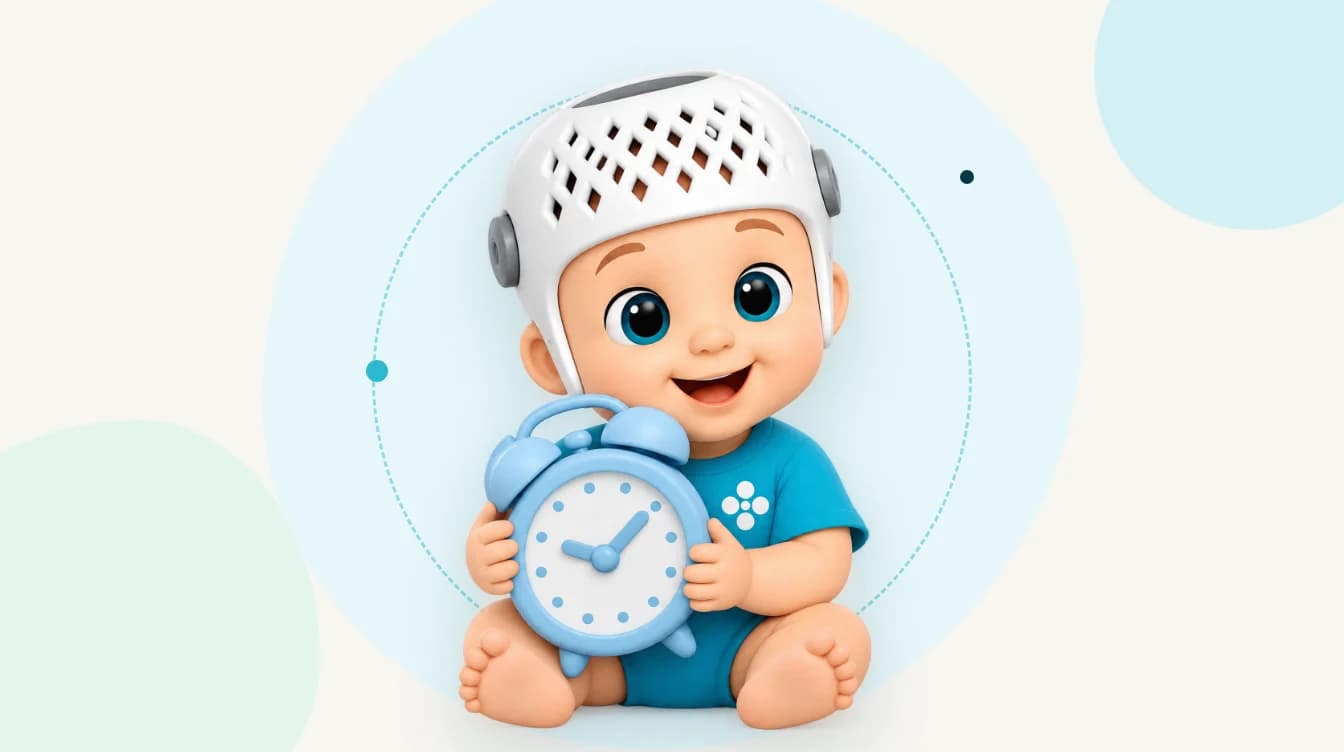
A cranial helmet (cranial orthosis) is usually worn 22–23 hours a day and removed only briefly for bathing, skin care and cleaning. Total treatment typically lasts a few months, depending on the baby's age at the start and how pronounced the asymmetry is. Because the skull grows faster in younger babies, earlier treatment is often shorter; when to stop is decided by follow-up measurements.
How many hours a day is a baby helmet worn?
The helmet works by guiding the growing skull into flattened areas, and this only happens while it is on. The usual recommendation is about 22–23 hours a day, including night sleep and naps. The daily break of about an hour is for bathing, skin checks and cleaning. Inconsistent wear may reduce the effect and lengthen treatment.
How is a baby introduced to the helmet?
There is a short wear-in period of a few days: a few hours on the first day, increasing gradually, with skin checks at each removal. Your team will explain the schedule and adapt it to your baby.
How many months does helmet therapy last?
- Starting age: younger babies grow faster, so change is usually quicker.
- Severity: more pronounced flattening may need more growth to improve.
- Consistency of wear
- The baby's growth rate
- Associated conditions such as torticollis, which may need ongoing physiotherapy
When does helmet therapy usually start?
Helmet therapy tends to be more effective while the skull is growing quickly. Mild cases usually start with repositioning and tummy time. For moderate or pronounced asymmetry that does not improve enough, a helmet is often considered around 4–6 months of age. It can be used later, but correction may be more limited and take longer. The decision is based on examination and measurement.
How often are follow-up visits?
At follow-ups the fit and skin are checked, the inner surface is adjusted to allow growth in the right areas, and measurements or 3D scans are repeated to track change. Visits are usually more frequent in the first weeks and then every few weeks. See our step-by-step helmet process.
Will my baby need a second helmet?
Most babies use one helmet with regular adjustments. Some who start very early, grow quickly or need longer treatment may outgrow it and need a new one. This is assessed at follow-ups and explained in advance.
When does helmet treatment end?
The end is based on measurements and examination, typically when head shape reaches acceptable symmetry, change between visits stops, or growth slows below the level where the helmet can help. A final measurement is compared with the starting one and shared with you.
What is daily life like with a helmet?
Most babies stop noticing the helmet within a few days, and feeding, play, sleep and outings continue as usual. Your baby can travel in a car seat or stroller with the helmet on. Because the helmet adds warmth, dressing your baby in one lighter layer and keeping the room cool can reduce sweating. Tummy time and floor play continue while awake, and any physiotherapy exercises for torticollis should also continue. Safe sleep rules still apply: on the back, on a firm, flat surface, with no pillows.
When should you contact your team?
- Redness, sores or blisters that do not fade within about an hour of removal
- The helmet slips, covers the eyes or seems too tight
- Your baby is unusually unsettled, feverish or unwell
- Cracks or damage to the helmet
For general health issues, see your pediatrician. To arrange an assessment, book an appointment or visit our treatments page.
Frequently asked questions
Is the helmet worn at night?
Yes, usually during night sleep and naps as well. Most babies get used to sleeping in it within a few days.
Can a helmet be used after 12 months?
It may be considered while the skull is still growing, but correction is usually more limited and slower. A specialist decides.
Does the helmet hurt?
A well-fitted helmet usually does not cause pain; it guides growth without squeezing. If your baby seems uncomfortable, have the fit checked.
Will the head shape change back after treatment?
Because treatment ends when growth has slowed, the shape achieved is generally expected to be maintained. Your specialist will advise whether further follow-up is needed.
Memet Ateş
Prosthetist–Orthotist