Metopic Suture Synostosis (Trigonocephaly)
A rare type of craniosynostosis caused by premature closure of the metopic suture (the forehead suture), which gives the front of the skull a triangular shape.
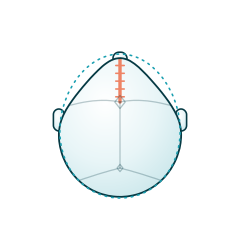
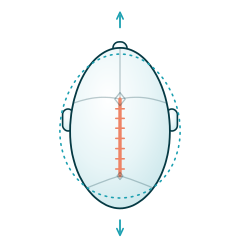
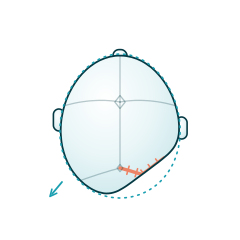
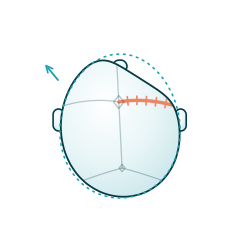
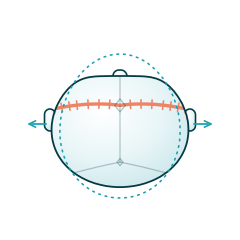
- Normal head contour
- Prematurely fused suture
Have you noticed these?
Signs
If you notice any of these signs, consult a specialist.
- Triangular-looking forehead, reduced distance between the eye sockets, hypotelorism, facial asymmetry, developmental delay
What Is Metopic Suture Synostosis (Trigonocephaly)?
Trigonocephaly is a rare type of craniosynostosis that occurs when the metopic suture in a baby's skull closes prematurely, either before birth or shortly after. This early fusion causes the front of the skull to take on a triangular shape.
Causes
It may result from a specific genetic mutation or from environmental factors. Certain medications taken during pregnancy (particularly anti-epileptic drugs such as sodium valproate) may play a role. Genetic factors are also thought to be capable of affecting brain development.
Shape Changes
It results in a triangular-looking forehead, a markedly reduced distance between the eye sockets, and eyes that sit closer together (hypotelorism).
Possible Complications
Because premature closure of the metopic suture can raise the pressure inside the skull, it may lead to various developmental delays. It can also cause headaches or general discomfort. If left untreated, it may later lead to problems with cognitive ability or overall development.
Diagnostic Methods
- Physical examination
- Imaging tests (X-ray, CT, MRI)
- Genetic evaluation
- A multidisciplinary approach
Surgical Options
Endoscopic Surgery: A minimally invasive procedure performed to reshape the bones.
Open Surgery: The classic approach, which requires opening and reshaping a large part of the skull.
Treatment Process and Age Range
Surgery is usually performed when the baby is between 2 months and 1 year of age. Helmet therapy is typically used for 6–9 months. Regular check-ups and developmental assessments follow surgery. Early intervention is critical for the normal development of the brain and skull.