What Is Tummy Time? A Month-by-Month Guide
What is tummy time, when can babies go on their tummy and how many minutes by age? A practical, safe month-by-month guide for parents.

Tummy time is awake, supervised play with your baby lying on their front. The World Health Organization (WHO) and the American Academy of Pediatrics (AAP) recommend starting with short sessions from birth, while sleep should always be on the back. Tummy time strengthens the neck, shoulders and back and reduces pressure on the back of the head, helping to prevent flat spots.
What does tummy time mean?
Tummy time means placing your baby on their front while they are awake and you are watching, on a firm flat surface, on your chest or across your lap. Your baby practises lifting the head, looking around and pushing up on the arms. It is a simple but important exercise for motor development.
Why should babies sleep on their back?
To reduce the risk of sudden infant death syndrome (SIDS), babies should sleep on their back for every sleep until 12 months, on a firm flat mattress without pillows, duvets, toys or positioners. Since back sleeping became widespread, flat spots at the back of the head have become more common. The answer is not to change sleep position, but to add tummy time and varied positions while awake.
When can babies go on their tummy?
Supervised tummy time can start in the first days of life. For newborns, the easiest way is lying on a reclined adult's chest. Tummy sleeping is not recommended. Once a baby can roll both ways independently, it is generally accepted that they can stay in the position they choose, as long as they are always put down on their back. Follow your doctor's advice for premature babies or babies with health conditions.
What are the benefits of tummy time?
- Strengthens neck, shoulder, arm and back muscles
- Prepares for head control, rolling, sitting and crawling
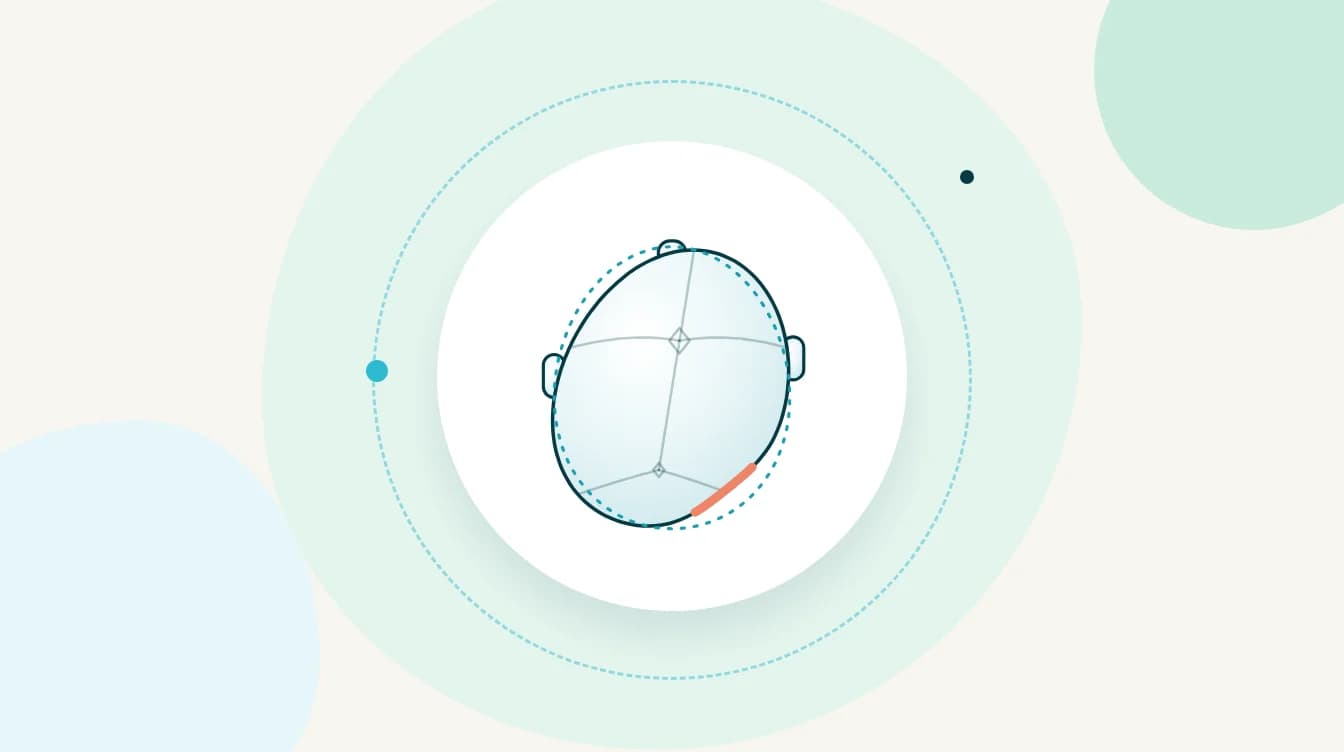
- Reduces constant pressure on the back of the head and helps prevent positional plagiocephaly and brachycephaly
- Offers new views of the world and supports sensory development
- Supports physiotherapy in babies with torticollis
How much tummy time by month?
These are general guides; every baby is different. WHO recommends at least 30 minutes of tummy time spread through the day for babies who are not yet mobile.
- 0–1 month: a few times a day, about 1–3 minutes each, ideally on your chest.
- 1–2 months: sessions of about 3–5 minutes as the baby begins lifting and turning the head.
- 2–3 months: aim for roughly 20–30 minutes in total across the day; many babies can rest on their forearms.
- 4–5 months: many babies manage more than 30 minutes in total, pushing up on straight arms and reaching for toys.
- 6 months and beyond: rolling, pivoting and getting ready to crawl; increase free floor play.
What if my baby hates tummy time?
- Start on your chest or lap so your baby can see your face.
- Get down to eye level, talk and sing.
- Place a small rolled towel under the chest for support (only when awake and supervised).
- Use high-contrast books, a baby-safe mirror or rattles.
- Try after a nappy change or waking up, not straight after a feed.
- Short, frequent sessions work better than long, stressful ones.
How do I keep tummy time safe?
- Never leave your baby alone on their tummy.
- If your baby falls asleep, turn them onto their back and move them to their cot.
- Use a firm, flat surface rather than a sofa or adult bed.
- Keep siblings and pets at a safe distance.
Does tummy time prevent flat head?
Tummy time is one of the most important daily habits for preventing positional flattening, but it cannot prevent every case on its own. Alternate head direction in the cot, carry your baby upright, limit time in car seats and bouncers, switch feeding sides and have any neck stiffness checked early. If flattening progresses despite these measures, specialist assessment matters. You can read about the conditions we treat on our treatments page.
When should you see a specialist?
- Your baby cannot lift the head at all on the tummy by 3–4 months
- The head is always turned to one side and turning the other way is difficult
- You notice flattening or uneven ears or forehead
- Muscles seem very floppy or stiff, or milestones are clearly delayed
- Any breathing difficulty or colour change on the tummy (seek urgent care)
Speak to your pediatrician first. To have your baby's head shape measured, you can book an appointment.
Frequently asked questions
How old should my baby be to start tummy time?
Supervised tummy time can start in the first days, in short sessions on your chest. Follow medical advice for premature babies.
How much tummy time per day?
WHO recommends at least 30 minutes spread throughout the day for babies who are not yet crawling, built up gradually from a few minutes.
Should I stop if my baby cries?
Don't force it. Take a break, comfort your baby and try again later in a different position.
What if my baby rolls onto their tummy during sleep?
If your baby can roll both ways independently, they can generally stay in the position they choose, as long as they are put down on their back and the cot is free of soft items.
Memet Ateş
Prosthetist–Orthotist