Does Plagiocephaly Go Away on Its Own? A Guide to Flat Head in Babies
Does a baby's flat head correct itself, and how long does it take? Mild vs moderate plagiocephaly, repositioning and when helmet therapy is considered.

Mild positional plagiocephaly often improves noticeably over a few months when it is spotted early and managed with repositioning and supervised tummy time. Moderate or more pronounced flattening is less likely to fully resolve on its own, so your baby's age, the degree of flattening and neck movement should be assessed by a specialist. Because the skull grows fastest in the first months, a "wait and see" decision should also be made in time and based on measurements.
Why does a baby's head become flat?
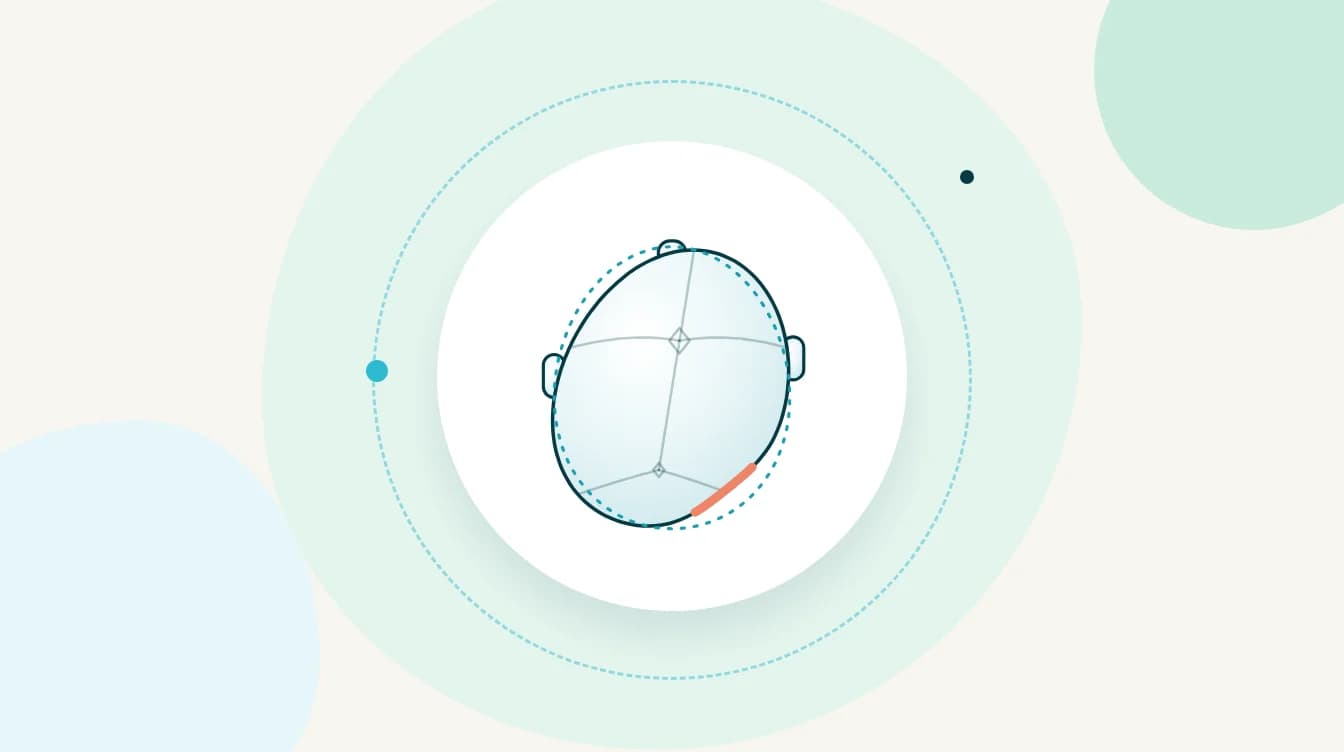
A newborn's skull is soft and the sutures between the bones are open. When a baby consistently rests on the same spot, the growing head cannot expand well there and a flat area forms. This is called positional (deformational) plagiocephaly. Back sleeping remains essential for safety; prevention relies on varying positions while the baby is awake.
- Always turning the head to the same side
- Tight neck muscles (torticollis)
- Crowding in the womb, twins or prematurity
- Long periods in car seats, bouncers and carriers
- Little tummy time while awake
Does plagiocephaly correct itself?
Mild flattening, especially when noticed in the first months, often improves as positioning changes and the baby starts moving more, lifting the head, rolling and sitting. In moderate and severe cases some asymmetry may remain. Every baby is different, so regular, measured follow-up is more reliable than guessing.
How long does a flat head take to improve?
There is no single answer. In mild cases with early repositioning, improvement is usually seen within a few months. Skull growth is fastest in the first year, particularly the first six months; as growth slows and the skull firms up, the potential for natural change decreases. That is why an assessment within a few weeks of noticing flattening is worthwhile.
What can parents do at home?
- Always place your baby on the back to sleep, alternating the direction the head faces.
- Change the baby's position in the crib so interesting things are on the non-flat side.
- Offer supervised tummy time several times a day while awake.
- Alternate arms when holding and feeding.
- Limit time in car seats, bouncers and swings to what is needed.
Do not use pillows, positioners or wedges for sleep; they are not consistent with safe sleep recommendations.
What if my baby has torticollis?
If your baby always turns to one side or struggles to turn the other way, tight neck muscles may be the cause. Repositioning alone is often not enough. With your pediatrician's guidance, physiotherapy and home stretching exercises can improve neck movement and support head shape improvement.
How is head flattening measured?
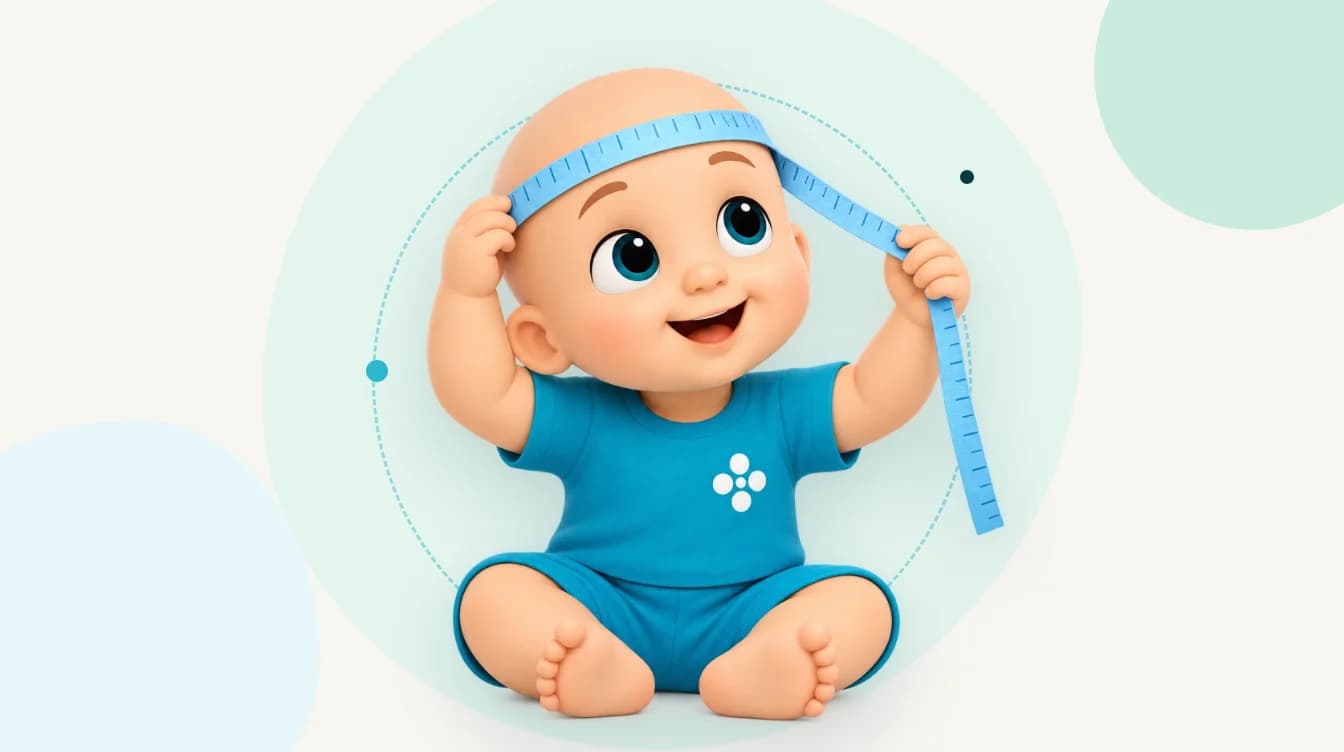
Specialists prefer to follow flattening with measurements rather than by eye, using calipers or a radiation-free 3D scan. One common value is the CVAI (cranial vault asymmetry index), which compares the two diagonal lengths of the head; a higher value means more asymmetry. These numbers are interpreted together with age, progress and examination, not on their own.
When is helmet therapy considered?
A cranial orthosis (helmet) aims to guide growth into the flattened areas while the skull is still growing. Mild cases usually start with repositioning and, if needed, physiotherapy. Helmet therapy may be considered for moderate or pronounced asymmetry that does not improve enough with these measures, often around 4–6 months of age. It can be used later too, but the potential for correction decreases as growth slows. See our treatments page and our step-by-step helmet process.
Is plagiocephaly always positional?
No. Rarely, an abnormal head shape is caused by early fusion of a skull suture (craniosynostosis), which does not improve with positioning and needs a different approach. Your pediatrician or a specialist will make this distinction.
When should you see a specialist?
- No improvement after 4–6 weeks of repositioning
- One ear shifted forward, forehead bossing or facial asymmetry
- Your baby always turns to one side or has limited neck movement
- The flattening is getting worse
- The head looks long and narrow, triangular or otherwise unusual
Start with your pediatrician. To have your baby's head shape measured, you can book an appointment.
Frequently asked questions
Will my baby's flat head fix itself?
Mild flattening often improves with early repositioning. Moderate and severe cases may improve less, so a specialist assessment is recommended.
When is plagiocephaly usually noticed?
Usually in the first 2–3 months. Mild shape differences right after birth may relate to delivery and often settle in the first weeks.
Does flattening go away once my baby sits up?
Sitting and rolling reduce pressure on the flat area and prevent further flattening, but how much existing asymmetry improves depends on remaining growth.
Does plagiocephaly affect brain development?
Positional plagiocephaly is generally considered a shape issue rather than one that directly affects brain development. Discuss any developmental concerns with your pediatrician.
Memet Ateş
Prosthetist–Orthotist