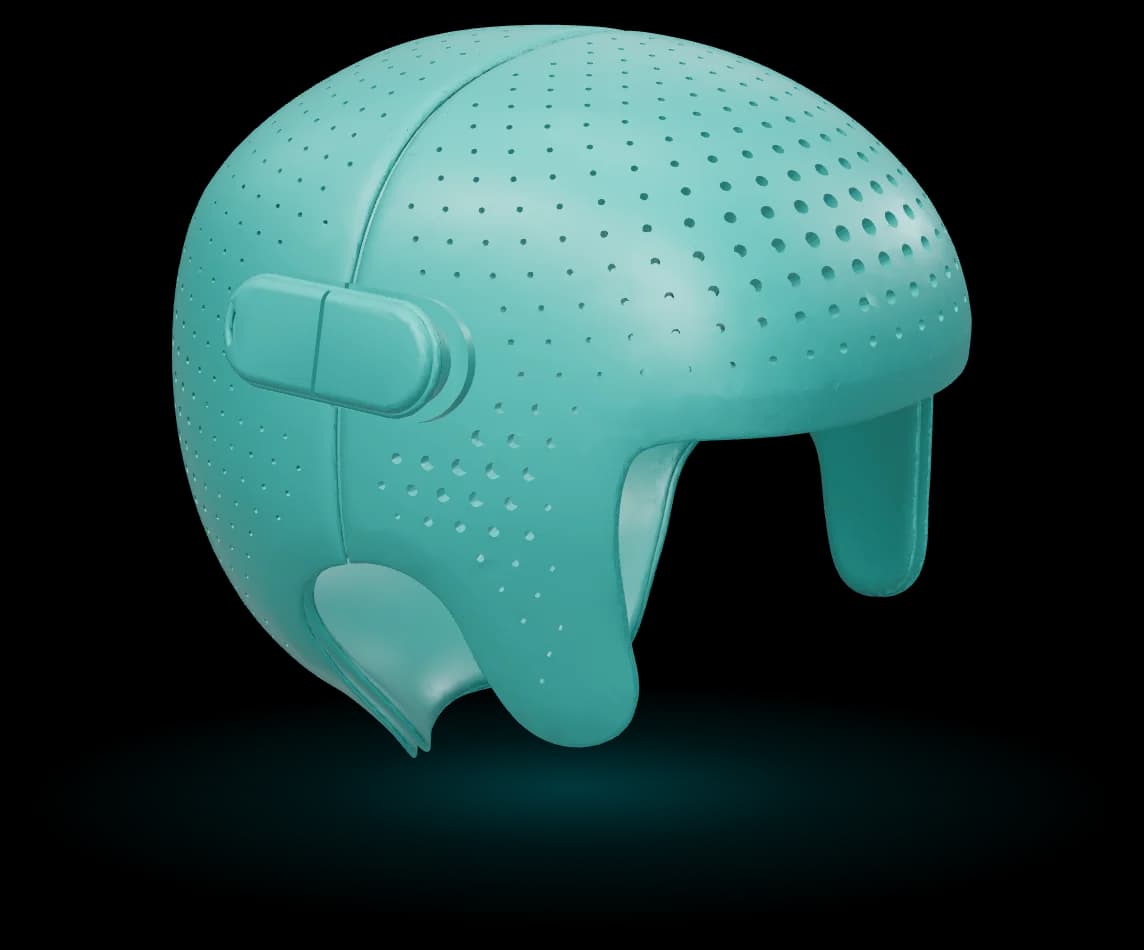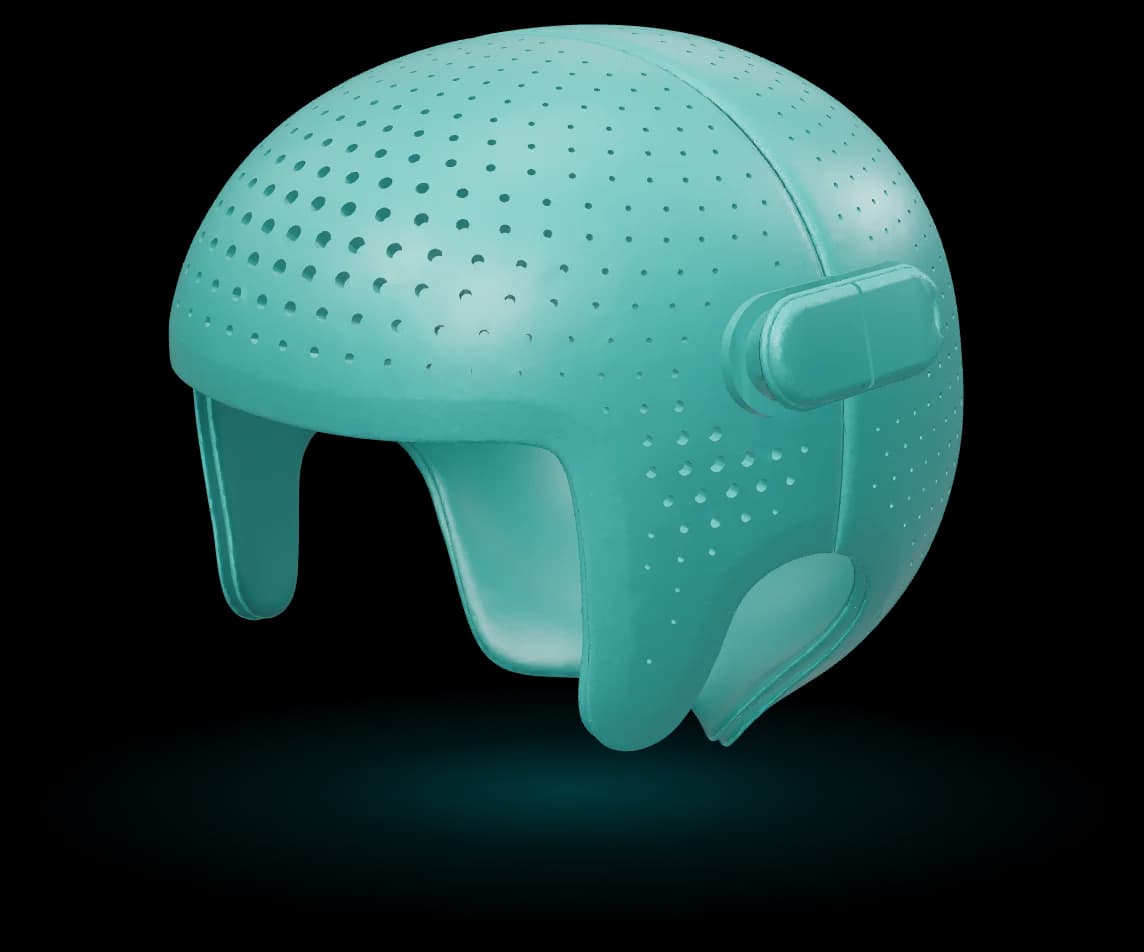
How does the helmet work?
The helmet does not squeeze the head. It rests lightly on the prominent areas and leaves space over the flattened areas. As the baby's skull grows naturally, the growth is directed into that space. The skull grows fastest in the first months of life, so the helmet has the most effect during this period.
Parents often call it a baby helmet, a flat head helmet or a plagiocephaly helmet. Its medical name is cranial orthosis. It is not an off-the-shelf product: each helmet is designed from the baby's 3D scan.
Which babies is it for?
After a specialist assessment, a helmet may be recommended for:
- Positional plagiocephaly: flattening on one side of the back of the head.
- Positional brachycephaly: flattening across the back of the head. The head looks short and wide.
- Asymmetric brachycephaly: both types of flattening together.
- Dolichocephaly: a head that is long from front to back and narrow at the sides.
- After craniosynostosis surgery: for shaping, as planned by the surgical team.
In craniosynostosis (early closure of one or more skull sutures), a helmet does not replace surgery. Before deciding on a helmet, the team checks whether the flattening is positional or caused by a suture. If craniosynostosis is suspected, the baby is referred to the appropriate doctor.
At what age does helmet therapy start?
For mild flattening, repositioning and awake tummy time are tried first, with physiotherapy if needed. If these do not help enough, or if the asymmetry is moderate to marked, a helmet is usually considered at around 4–6 months. Treatment can start later too, but as skull growth slows, the expected change is smaller and treatment may take longer. The decision to start is based on an examination and measurements.
Helmet therapy step by step
Assessment
About 20–30 minutes
The baby's birth and development history is taken, and the head shape and neck movement are examined. The team explains whether a helmet is needed or whether repositioning is likely to be enough.
3D scan
5–10 minutes · no radiation
The head shape is recorded in 3D with an optical scanner that does not touch the head. Asymmetry measurements (CVAI and cephalic index) are calculated. The scan is also used for comparison at later check-ups.
Custom design and production
About 1–2 weeks
The helmet is designed from the scan to leave room for growth over the flattened areas, and it is produced with CE-certified manufacturing.
Fitting and getting used to it
First 3–5 days
The helmet is fitted and checked. Parents are shown how to put it on and take it off, clean it and check the skin. Wearing time starts with a few hours and increases each day.
Regular check-ups
Throughout treatment
As the baby grows, the inside of the helmet is adjusted and the skin and fit are checked. Measurements or scans are repeated to track the change. When to finish is decided from the check-up measurements.
How many hours a day, and for how many months?
The helmet only works while it is on the head, so it is usually worn 22–23 hours a day, including night-time sleep and naps. It comes off only for bathing, skin care and cleaning the helmet. Treatment usually lasts between 3 months and 1 year. The main factors are:
- The baby's age at the start of treatment
- The type and degree of flattening
- Wearing the helmet for the recommended hours
- How fast the baby is growing
- Related conditions such as torticollis
Daily life with a helmet
Most babies get used to the helmet within a few days. Feeding, play, sleep and outings continue as usual. The helmet keeps the head warm, so dressing the baby in one lighter layer and keeping the room cool helps reduce sweating. Awake tummy time continues throughout treatment, and physiotherapy exercises continue if the baby has torticollis. Safe sleep rules still apply: on the back, on a firm flat surface, with no pillow.
Cranial Helmet Care: Sleep, Cleaning, Sweating and Skin CareHelmet therapy at Cranioplus
Cranioplus is a cranial orthosis centre licensed by the Turkish Ministry of Health. Helmets are produced with CE Class I and ISO 13485 certified manufacturing. There are 26 service points in Turkey and abroad. Families travelling from abroad can find the process on our international families page.
Related pages
Frequently asked questions
Is the helmet uncomfortable for my baby?
There is a short adjustment period in the first days. A helmet made to the right measurements and checked regularly is usually well tolerated, and most babies stop noticing it within a few days. Contact the team if redness does not fade, if there is a sore, or if the helmet slips.
Is the helmet worn during sleep?
Yes. It stays on during night-time sleep and naps. Safe sleep rules still apply: on the back, on a firm flat surface, with no pillow.
Does the helmet affect brain growth?
No. The helmet does not restrict skull growth; it guides the direction of growth toward the flattened areas.
Will my baby need a new helmet as they grow?
For most babies, one helmet can be used for the whole treatment with regular adjustments. Some babies who start very early, grow quickly or need longer treatment may need a second helmet. This is assessed at check-ups and explained to parents in advance.
My baby is over 1 year old. Is it too late?
An assessment can still be done at an older age. However, as skull growth slows, the expected change is smaller. The right option for your baby is decided after an examination and measurements.
Can families from abroad have helmet therapy in Turkey?
Yes. Our international families page explains the steps, how to prepare for the visit and how to contact us on WhatsApp in English or Arabic.
This page is for general information. The right approach for your baby is decided after an examination and measurements.