Lambdoid Suture Synostosis (Posterior Plagiocephaly)
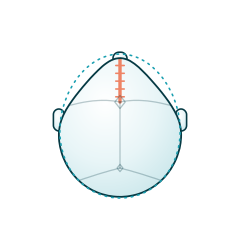
A congenital anomaly caused by the lambdoid suture in a baby's skull closing earlier than normal. The back of the head flattens and the skull looks asymmetrical.
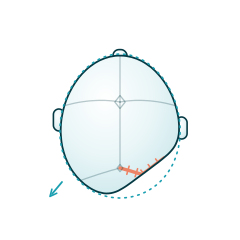
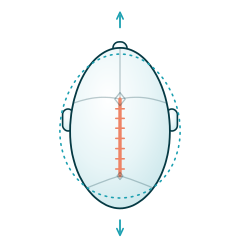
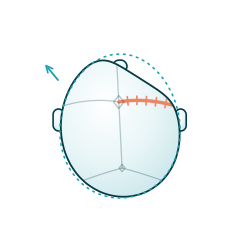
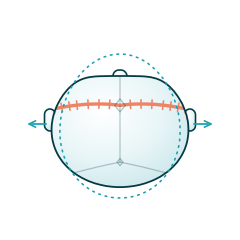
- Normal head contour
- Prematurely fused suture
- Compensatory growth
Have you noticed these?
Signs
If you notice any of these signs, consult a specialist.
- Asymmetrical flattening at the back of the head, changes in ear position, raised intracranial pressure, facial asymmetry, early-hardening fontanelles
What Is Lambdoid Suture Synostosis (Posterior Plagiocephaly)?
Lambdoid craniosynostosis is a congenital anomaly caused by the lambdoid suture in a baby's skull closing earlier than normal. Because this suture is critical for brain development both before and after birth, its early closure can deform the skull and adversely affect brain growth.
The condition causes flattening at the back of the head and creates an abnormal head shape. Lambdoid craniosynostosis is usually noticed at birth or during routine check-ups in infancy (for example, as a "flat spot"). Early closure can also raise intracranial pressure, leading to serious complications for brain development.
This specific type of craniosynostosis accounts for approximately 5–15% of all cases.
Causes
- Genetic Factors: It is more common in babies with a family history of craniosynostosis.
- Environmental Influences: Certain medications, alcohol use and nutritional deficiencies during pregnancy may increase the risk.
- Syndromic Conditions: It may be associated with genetic syndromes such as Apert, Crouzon or Pfeiffer syndrome.
- Maternal Health: The mother's health and nutritional status during pregnancy can influence the risk.
- Prenatal Trauma: Trauma during pregnancy may increase the risk of suture closure anomalies.
Symptoms
- Asymmetrical Head Shape: The back of the head flattens on the affected side, while a noticeable bulge forms on the opposite side.
- Changes in Ear Position: The ear on the affected side often appears pushed forward because of the underlying bone deformity.
- Effects on Brain Development: Premature suture closure can restrict brain growth and increase intracranial pressure.
- Facial Asymmetry: The expected symmetry of the face may be disrupted.
- Fontanelle Changes: The soft spots (fontanelles) may develop unusually or harden early.
Treatment
Open Surgery: Direct reshaping of the bone through a large incision at the back of the head.
Endoscopic Surgery: A minimally invasive technique using small incisions. It shortens recovery time but usually requires helmet therapy after surgery.
Postoperative Care: After endoscopic surgery, custom helmet therapy is used to guide skull growth and prevent the deformity from recurring. Regular assessments are carried out to monitor head shape and growth.
Age Range
To optimize brain development, surgery is generally recommended between 6 and 12 months of age. Early diagnosis and intervention are critical to supporting healthy development.