Does My Baby Have a Big Head? When Does Head Circumference Matter?
Is a big head in a baby a sign of illness? Familial large head, how head circumference is measured, growth charts and warning signs to know.
A baby’s head looking big is usually not a sign of illness: babies’ heads are naturally large compared with their bodies, and in some families a larger head is simply inherited. What matters more than a single measurement is how head circumference tracks on the growth chart, together with the baby’s overall health and development. If head size is rising quickly across percentile lines, or there is a tense soft spot, vomiting, unusual irritability or developmental delay, the baby should be seen by a pediatrician promptly.
Why do babies’ heads look big?
At birth the head is large in proportion to the body because the brain is growing rapidly. As children grow, the trunk and legs lengthen faster and proportions change. Many parents feel their baby’s head is big, yet in most cases head circumference is within the normal range for age. Head shape also affects perception: a flat, wide back of the head can look large even when its size is normal.
What is macrocephaly?
Macrocephaly means head circumference above the upper limit of normal on growth charts for the baby’s age and sex, usually defined as above the 97th or 98th percentile or more than two standard deviations above the mean. It is a finding, not a diagnosis: it means the cause should be considered and the growth followed, not that a disease is present.
What causes a big head in babies?
- Familial (benign) macrocephaly: One parent also has a large head; the baby is well, develops normally and tracks steadily along a high percentile. This is the most common cause.
- Temporarily widened fluid spaces around the brain: Seen in some infants on imaging, often benign and settling over time, with diagnosis and follow-up by a doctor.
- Fluid build-up in the brain (hydrocephalus): Can show as rapid head growth and needs medical assessment. See hydrocephalus.
- Rarer causes: Some genetic or metabolic conditions, bleeding or masses, usually with other signs.
How is head circumference measured?
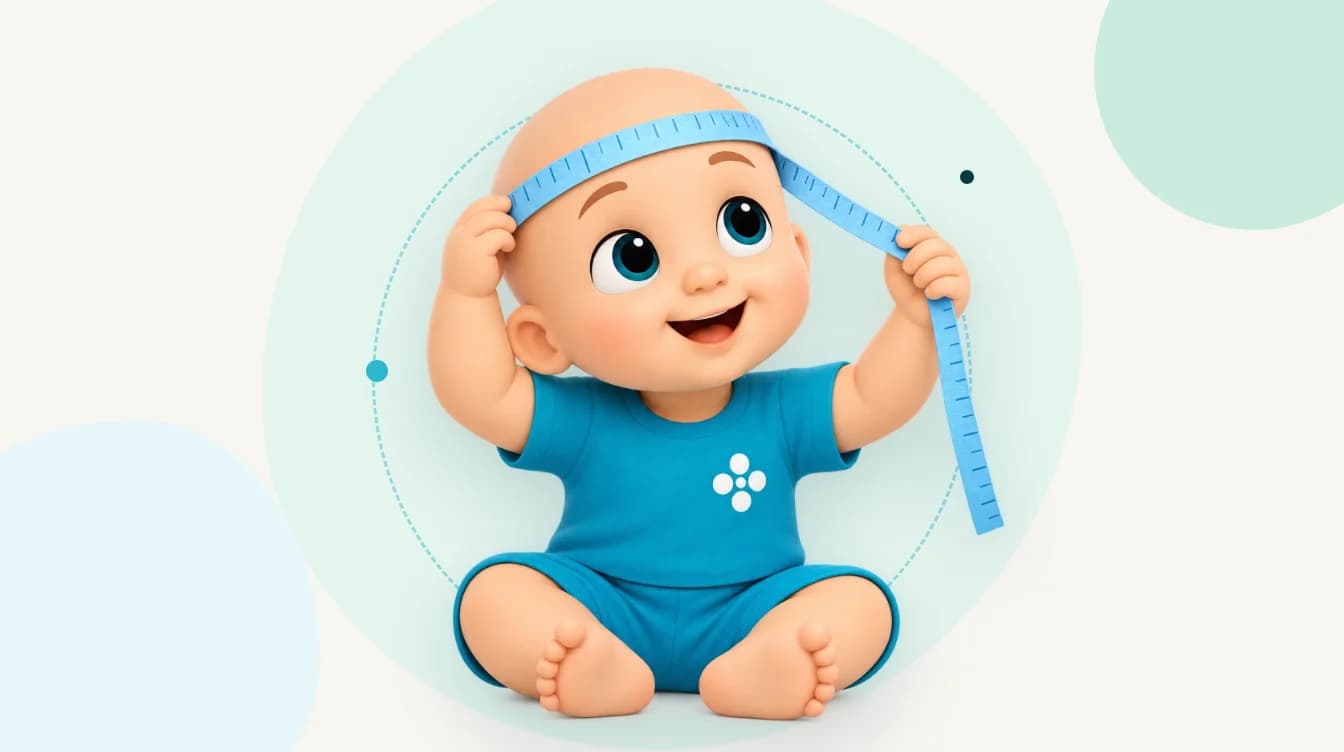
- Use a non-stretch tape; remove hats and hair ties.
- Place the tape just above the eyebrows, over the most prominent part of the forehead.
- Wrap it around the most prominent point at the back of the head, above the ears.
- Repeat a few times and record the largest value.
To see roughly where a measurement falls for age, use our head circumference calculator. It gives an approximate percentile to discuss with your pediatrician but does not make a diagnosis.
When does a big head matter?
- Head circumference crossing percentile lines upwards over a short time
- A tense, bulging front soft spot when the baby is calm and upright
- Repeated vomiting or refusing feeds
- Marked irritability, high-pitched crying or unusual sleepiness
- Eyes persistently looking downwards
- Developmental delay, loss of skills or seizures
Any of these needs prompt pediatric or emergency assessment. Read more about soft spot warning signs in when does the soft spot close.
How is familial macrocephaly recognised?
Doctors often measure the parents’ heads too. If a parent has a large head, the baby is well, develops normally and follows their own curve, monitoring alone is often enough. The doctor decides whether any further tests are needed.
Is head size the same as head shape?
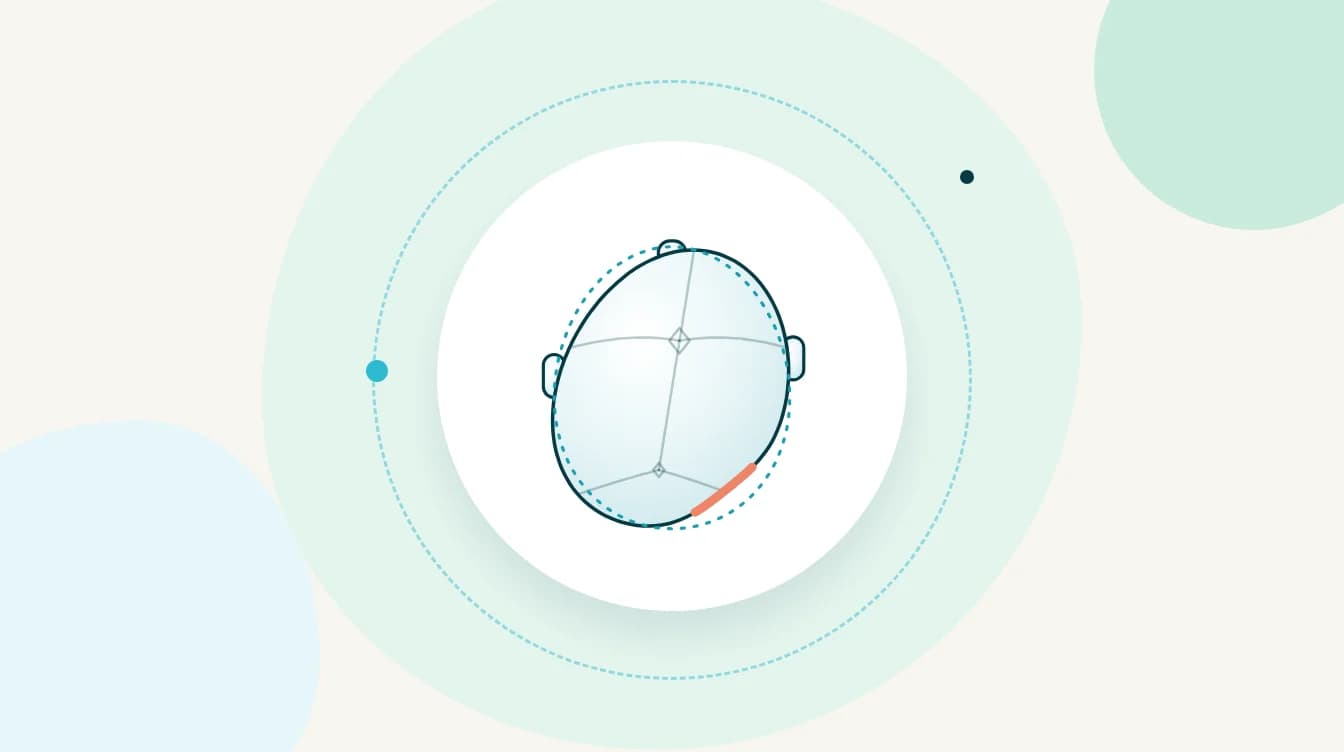
No. Size is measured by head circumference; shape is about symmetry and proportions. A short, wide head with a flat back (brachycephaly) may look big while its circumference is normal, and a baby with normal head size can have noticeable plagiocephaly. Head shape treatments such as a cranial helmet do not change head size. See baby head shapes.
When should you see a specialist?
See a pediatrician without delay if head size is rising quickly or warning signs are present; referral to a pediatric neurologist or neurosurgeon may follow. If your baby is well but the head seems big to you, raise it at routine check-ups. For concerns about flattening or asymmetry, you can book a head shape assessment.
Frequently asked questions
Does a big head mean a baby is more intelligent?
Head size within the normal range does not tell you about intelligence. Healthy development and steady growth are what matter.
Will my baby’s big head become normal?
In familial macrocephaly the head usually stays relatively large but causes no health problems; it looks less prominent as body proportions change.
What if head circumference is above the 97th percentile?
Share it with your pediatrician, who will consider family measurements, development and earlier readings.
Is a big head with an open soft spot a problem?
The front soft spot usually closes between 12 and 18 months, and later closure alone is not a disease. Ask your doctor to assess both together.
Are helmets used for big heads?
No. A cranial helmet does not treat head size; it may be recommended only for positional head shape problems after specialist assessment.